We’ve all heard it a thousand times. Think positive. Practice gratitude. Count your blessings. And look, none of that is bad advice. Gratitude practices are wonderful. Positive affirmations can shift your mindset. But what if I told you there’s an emotion that goes deeper than all of that — one that actually changes you at a cellular level — and most of us are completely overlooking it?
That emotion is awe.
Not gratitude. Not joy. Not optimism. Awe.
You know the feeling. You’re standing somewhere — the edge of a canyon, the shore at sunrise — and for a second, your brain just goes quiet. You watch a flock of birds sweep across a pink October sky and something in your chest opens up. You hold a newborn for the first time and the whole universe suddenly feels like it reorganized itself around this one tiny person. That’s awe. It stops you mid-thought. It makes you forget yourself — in the best possible way.
It’s bigger than happiness.
Here’s where it gets really interesting. Researchers at UC Berkeley have been studying awe for years, and what they’ve found goes far beyond “it feels nice.” Dr. Dacher Keltner’s lab discovered that awe significantly reduces pro-inflammatory cytokines — specifically interleukin-6 (IL-6) — which are markers linked to chronic disease, depression, autoimmune conditions, and even heart disease. In other words, awe doesn’t just make your mind feel better. It calms inflammation in your body at a biological level.
Let that sink in for a second. An emotion is shifting your cellular chemistry.
Other studies have shown that people who regularly experience awe report lower stress, stronger immune function, and greater overall well-being. A 2023 study published in the journal Emotion found that even brief “awe walks” — just 15 minutes of intentionally noticing something vast or wondrous — led to measurable decreases in anxiety and increases in prosocial behavior over an eight-week period. Participants didn’t just feel better emotionally. Their bodies responded too.
Meanwhile, while gratitude and positive thinking have their own well-documented benefits, the research suggests they primarily work on a cognitive level — reshaping thought patterns and mental frameworks. Awe works differently. It bypasses the thinking mind altogether and lands somewhere deeper, almost primal. It quiets the default mode network in the brain, the part responsible for self-referential thinking and rumination. When you’re in awe, you’re not worrying. You’re not planning. You’re not replaying that awkward thing you said in 2014. You’re just… present.
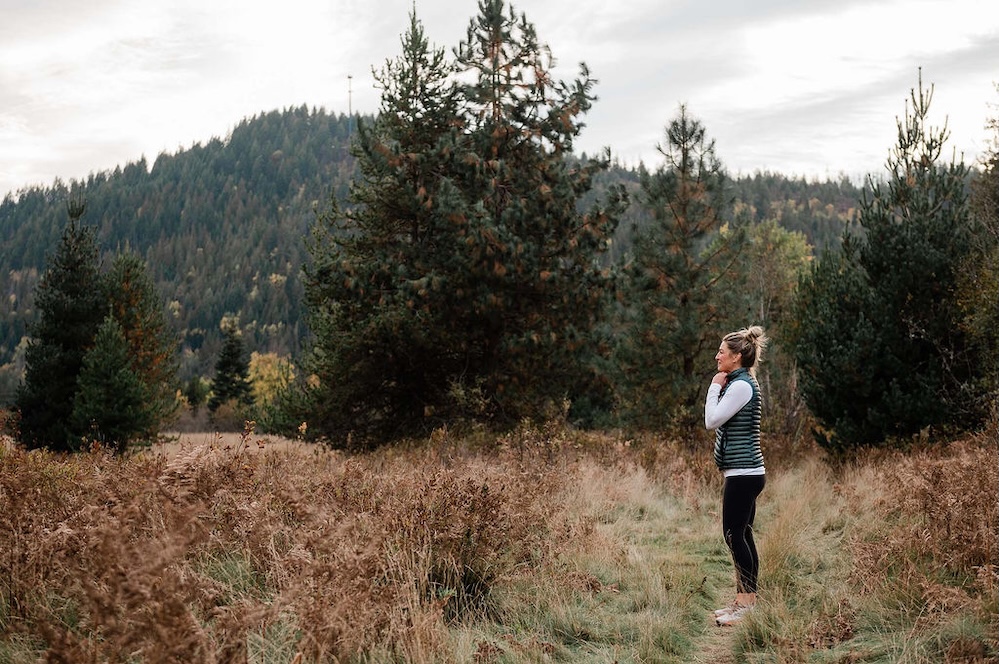
If you’ve ever felt genuinely restored after time outside — not just relaxed, but different somehow — this is a big reason why. Nature is one of the most reliable sources of awe available to us. The scale of a mountain range, the rhythm of ocean waves, the beauty of dew drops on a leaf.
I experience the most awe in nature, and I don’t think that’s a coincidence. There’s a reason forest bathing has measurable health outcomes. There’s a reason people recovering from illness feel drawn to the ocean. It’s not just fresh air and vitamin D (though those help). It’s that nature is one of the few places left in modern life that consistently delivers the experience of awe — and our bodies know what to do with it.
Here’s the really good news: awe doesn’t require a plane ticket or a mountaintop. Researchers have found that awe is available in surprisingly ordinary moments — if you’re paying attention. Watching clouds shift. Noticing the way light comes through a window in the late afternoon. Listening to a piece of music that gives you chills. Even hearing someone’s story of resilience or kindness can trigger it.
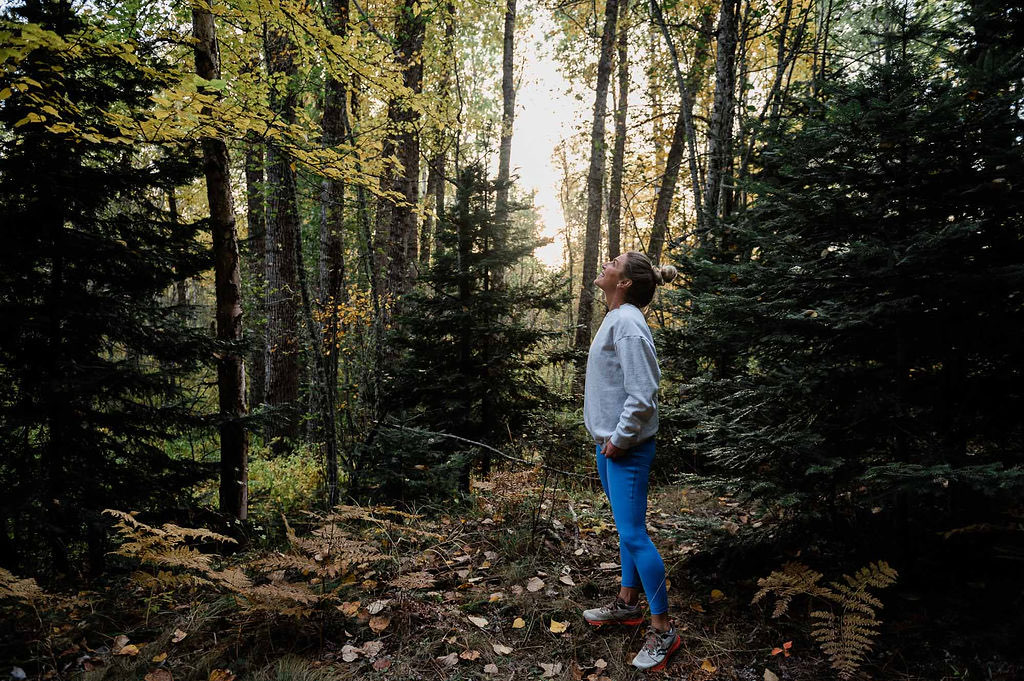
The key is slowing down enough to let it in. Awe requires a little bit of spaciousness. You can’t experience it while scrolling your phone or rushing through a to-do list. It asks you to pause, look up, and let yourself be moved.
So, here’s my challenge. The next time you’re tempted to reach for a gratitude list or a positive affirmation (and again, those are fine tools), try something different first. Step outside. Look up at the sky. Find something that makes you feel small — not in a diminishing way, but in that expansive, connected, “oh wow, this is all so much bigger than me” way.
Let yourself feel it.
That feeling? That’s your body healing itself in real time.
Awe isn’t a luxury. It’s not a nice-to-have. Based on everything the research is showing us, it might be one of the most powerful medicines we have access to — and it’s free, it’s everywhere, and it’s been waiting for you this whole time.