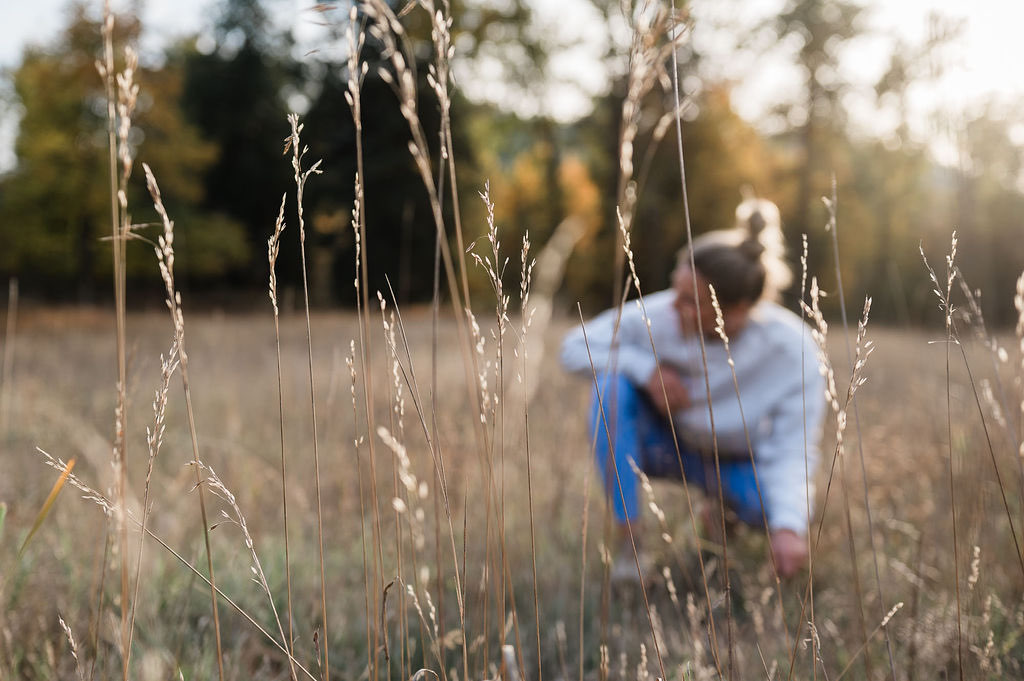
I just read a book that changed my life. It’s called The Ruthless Elimination of Hurry by John Mark Comer, and it was easily one of the most eye-opening books I’ve read in a long time. I truly couldn’t recommend it more.
Because the truth is, modern life naturally pulls us into hurry and chaos. There is always somewhere to be, something to finish, someone to respond to. Another email. Another notification. Another appointment. Another workout. Another errand. Another thing we should be doing. And we’ve normalized it.
We’ve normalized moving through our days at a pace that leaves almost no room to pause, recover, process, or simply be. Hurry has become so woven into the way we live that we often don’t even recognize it as hurry anymore. We just call it life. And this book really made me think about what that is doing to us.
Because we’re exhausted. We’re overstimulated, distracted, overcommitted, constantly consuming information, constantly responding, constantly anticipating whatever is coming next. And then we wonder why we’reanxious. Why we can’t focus. Why we’re exhausted but can’t sleep. Why we feel disconnected from ourselves. Why our bodies feel tense. Why sitting quietly for ten minutes can feel almost impossible.
We have forgotten how to be still. And I think it’s costing us far more than we realize.
One of my biggest takeaways from The Ruthless Elimination of Hurry is that hurry isn’t simply having too much on your calendar. Eventually, it becomes the way you move through your entire life. You wake up and immediately think about what needs to happen that day. You rush through breakfast. You rush to work. You multitask through lunch. You squeeze in your workout. You answer texts while making dinner. You scroll while watching television. And even when your body finally gets into bed, your brain is still going. What’s next? What did I forget? Who needs me? What do I need to do tomorrow? Your body never really gets the message that the day is over.
We need rhythms of effort and recovery. Productivity and rest. Connection and solitude. Noise and silence. Rest isn’t something we should finally allow ourselves to have when everything else is finished, because everything else is never finished.
Think about the last time you had 30 seconds with absolutely nothing to do. Did you reach for your phone? Most of us do. Standing in line? Phone. Waiting for someone? Phone. Eating lunch alone? Scroll. Walking? Podcast. Cleaning? Audiobook. Getting into bed? One last check of Instagram. There is almost never a moment when we aren’t consuming something.
Our brains learn from repetition, and when we repeatedly reach for novelty, information, entertainment, or stimulation, we reinforce the desire for another little reward. Dopamine itself isn’t bad—it’s an essential part of motivation, learning, anticipation, and reward. But our modern world gives us an almost endless supply of opportunities to chase the next interesting thing. And eventually, ordinary life can start to feel like it isn’tstimulating enough. Silence feels boring. Walking without headphones feels boring. Sitting outside feels boring. Waiting feels unbearable. Being alone with our thoughts can feel uncomfortable. So we reach for something else. And then something else.
And I think one of the greatest casualties of all of this stimulation is our ability to simply be where we are.
This may have been one of my biggest takeaways: when every minute is filled, we also never have to sit still long enough to notice what is happening inside of us. The sadness. The anger. The grief. The disappointment. The fear. The resentment. The exhaustion. The conversation we haven’t processed. The thing that hurt us that morning. The feeling we pushed aside because we had somewhere to be.
When there is always another task, workout, appointment, podcast, television show, email, or person who needs something from us, it becomes incredibly easy to move right past our emotions. But our bodies are constantly responding to our experiences. Emotional stress changes our physiology. It can influence our nervous system, breathing patterns, muscle tension, sleep, digestion, hormones, immune signaling, heart rate, and even how our brain interprets sensations coming from the body.
This is why creating space to actually feel and process our lives as they are happening matters so much. We don’t need to fear emotions or turn every uncomfortable feeling into another project to fix. Sometimes we simply need enough quiet to notice it, feel it, acknowledge it, and allow it to move through us. But we cannot do that if we are constantly outrunning ourselves.
This book also made me think about how much of our lives we spend trying to get to the next moment. We rush through breakfast to get to work. Rush through work to get to our workout. Rush through our workout to get home. Rush through dinner to clean up. Rush through the evening to finish the list. And suddenly we’re lying in bed wondering where the entire day went. Then those days become months. Those months become years. And the life we’ve been working so hard to optimize has been happening around us while our minds were somewhere else.
I don’t want to accomplish my life. I want to experience it.
I want to taste my food. Notice the view. Look people in the eyes. Have conversations that aren’t squeezed between appointments. Take a walk without turning it into productivity. Sit outside without needing to learn something. Stay at the table a little longer. Watch the sunset without needing to photograph it. Have white space on my calendar and not immediately fill it.
Because maybe the goal isn’t to see how much life we can cram into our days. Maybe it’s becoming present enough to actually experience the life already inside them.
Some of my biggest takeaways from The Ruthless Elimination of Hurry were incredibly simple: eliminate unnecessary hurry and start noticing how often you’re rushing simply because rushing has become your normal speed. Protect silence and solitude by giving yourself moments when nothing is entering your brain—no podcast, scrolling, television, or information. Stop filling every empty moment. Let yourself be bored. Stand in line. Drive without listening to anything. Sit outside. Look out the window. Give your brain a chance to wander.
Create a real rhythm of rest. One of the central practices Comer talks about is Sabbath—a regular period of stopping, resting, delighting, and reconnecting with God. I love the larger lesson here: there should be time in our lives when productivity simply isn’t the point.
Do fewer things, more intentionally. Every yes costs something, and a fuller calendar does not necessarily create a fuller life. Put boundaries around technology because your attention is one of your most valuable resources. Turn off unnecessary notifications. Create phone-free spaces. Stop giving everyone unlimited access to you.
Create margin. Stop scheduling every minute of every day. Leave room between things. Leave room to breathe. Leave room for conversations to run long. Leave room for absolutely nothing.
And be where your feet are. When you’re eating, eat. When you’re walking, walk. When someone is talking to you, listen. When you’re resting, actually rest. When something uncomfortable comes up, resist the immediate urge to distract yourself. Notice it. Name it. Get curious about it. Give yourself enough space to actually process your life while you’re living it.
And stop believing you have to earn rest. You are a human being, not a productivity machine. Rest is not laziness. Slowing down is not failure. Recovery is part of being healthy.
We live in a culture constantly telling us that the answer is more. More productivity. More information. More optimization. More achievement. More experiences. More stimulation. More things to accomplish.
But maybe some of the most important things we could add to our lives require subtracting something first.
Less hurry. Less noise. Less stimulation. Less obligation. Less scrolling. Less rushing through one moment to get to another.
And more quiet. More presence. More rest. More connection. More room to feel. More time with the people we love. More ability to notice that our lives are happening right now.
The Ruthless Elimination of Hurry was genuinely one of the best books I’ve read, and I think I’ll be thinking about its message for a very long time. Because I don’t want to become incredibly efficient at rushing through my life.
I want to actually be here for it.